21 Watercolor Riding Bicycle Bundle: Editorial Illustrations
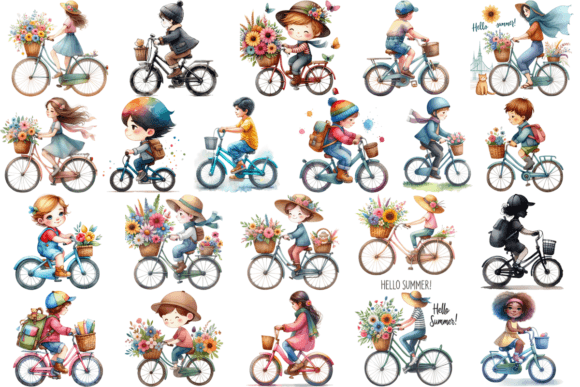
As a digital publisher who has spent over a decade refining blog aesthetics and managing content workflows, I approach every new graphic design asset with a critical eye. It is not enough for an asset to simply be "pretty"; it must serve a functional purpose within an editorial strategy. When I first opened the 21 Watercolor Riding Bicycle Bundle, my immediate assessment focused on its versatility for lifestyle publishing. The collection immediately establishes a mood that is nostalgic yet active, blending the softness of traditional watercolor media with the dynamic energy of cycling. For publishers in the wellness, travel, sustainable living, or family lifestyle niches, this bundle offers a distinct alternative to the sterile vector art or overly saturated stock photography that currently saturates the web.
The visual texture here is significant. In web design, texture builds trust. Flat, generic graphics can sometimes signal low-effort content to a reader scanning a feed. These illustrations, however, carry the imperfections and organic flow of hand-painted art, which subconsciously communicates authenticity and craftsmanship. This is crucial for bloggers and affiliate marketers trying to build a personal connection with their audience. The aesthetic leans feminine and artistic without being juvenile, making it appropriate for adult-focused content regarding urban commuting, eco-friendly transport, or leisurely weekend activities.
Deploying Assets Across the Content Ecosystem
In a real publishing workflow, consistency is the metric of success. A single beautiful image does not make a brand; a cohesive system does. The 21 Watercolor Riding Bicycle Bundle provides enough variation to create that system without looking repetitive. When designing blog graphics for featured images, I found the individual bicycle elements easy to isolate and place against solid or textured backgrounds. This flexibility is vital for maintaining a consistent visual hierarchy across category pages. Instead of using disparate stock photos that clash in lighting and style, these assets allow you to unify your archive visually.
For Pinterest marketers, this bundle is particularly high-value. Pinterest pin creation requires vertical formats with clear focal points. The watercolor bicycles serve as excellent anchor elements that draw the eye without competing with headline text. I tested several compositions where the bicycle was positioned in the lower third of the pin, leaving ample negative space for bold typography. This balance is essential for click-through rates. Furthermore, because watercolor edges are naturally soft, they blend seamlessly into gradient backgrounds often used in modern social media graphics, avoiding the harsh cutout look that plagues amateur designs.
Beyond social promotion, consider the application in digital product creation. If you are developing a lead magnet, such as a "Guide to Urban Cycling" or a "Spring Wellness Checklist," these illustrations add perceived value. A digital guide cover featuring one of these detailed bicycles looks significantly more premium than one using standard clip art. Similarly, for creators selling printable design files or planners, the watercolor style translates beautifully to print, retaining its charm even when scaled down for A4 or Letter-sized paper. The bundle effectively bridges the gap between screen-based content marketing and tangible creative design products.
Strategic Placement and Performance Impact
Understanding where to deploy this asset is just as important as knowing how to use it. The 21 Watercolor Riding Bicycle Bundle excels in areas requiring emotional resonance and thematic reinforcement. It is ideal for:
- Website Header Graphics: Creating a welcoming, seasonal atmosphere for landing pages.
- Newsletter Headers: Adding a personalized touch to email campaigns that increases engagement.
- Editorial Accents: Breaking up long-form text in blog posts to maintain reader attention.
- Affiliate Marketing Banners: Softening the commercial feel of product recommendation sections.
- Canva Template Elements: Building reusable templates for team members or clients.
Conversely, there are environments where caution is necessary. While the artistic style is a strength, it can be a limitation in specific contexts. Avoid using these detailed watercolors as tiny mobile thumbnails; the intricate brushwork will muddy at small sizes, reducing clarity. They are also less suitable for highly technical or corporate content where precision and authority outweigh whimsy. Additionally, because watercolor relies on subtle tonal variations, placing text directly over the artwork without a sufficient overlay or contrast box can destroy readability. Always prioritize accessibility and legibility over decoration.
Publisher Notes: Technical and Licensing Due Diligence
Before integrating the 21 Watercolor Riding Bicycle Bundle into a live production environment, rigorous testing is non-negotiable. As part of my review process, I evaluated the assets against several practical benchmarks relevant to professional publishing.
Typography Pairing: The organic nature of these illustrations demands careful font selection. I tested them against various typefaces and found they pair exceptionally well with clean sans-serif fonts for a modern look, or elegant serifs for a classic editorial feel. Be cautious with script fonts; combining handwritten watercolor with handwritten type can create visual chaos. Let the illustration provide the texture while the typography provides the structure.
Web Performance: Watercolor files can be deceptively heavy due to the complex color information and edge detail. Before uploading, always compress these images. Use modern formats like WebP where possible to retain the delicate transparency and gradients without bloating page load times. A slow site kills user experience faster than ugly design ever could.
Licensing Verification: This is the most critical step for any commercial publisher. Before using this bundle on monetized blogs, affiliate marketing pages, or within paid digital download products, you must confirm the specific commercial license terms. Verify whether attribution is required and if there are limits on impressions or end-products. Respecting intellectual property protects your business from liability and supports the artists who create these resources.
Cross-Device Testing: Never assume an asset looks the same on all screens. Preview the illustrations on both desktop monitors and mobile devices. Check how the colors render in dark mode versus light mode. Ensure the brand identity remains intact regardless of the viewing environment. I also recommend testing the assets in grayscale to ensure they hold their form and recognizability even when color is removed, which is helpful for accessibility and print considerations.
Elevating Editorial Quality Through Intentional Design
Ultimately, the 21 Watercolor Riding Bicycle Bundle is more than just a collection of pretty pictures; it is a tool for narrative storytelling. In the crowded landscape of digital publishing, readers are drawn to content that feels curated and human. By incorporating these illustrations thoughtfully, publishers can elevate their editorial design from functional to memorable. Whether you are crafting a small business branding package, designing a seasonal website header, or building a library of Canva template assets, this bundle offers the stylistic coherence needed to stand out.
The true value lies in its ability to soften the digital edge. In an era of AI-generated perfection and rigid corporate minimalism, the hand-touched quality of watercolor signals care. It tells the reader that a human being created this content. For bloggers, educators, and creative entrepreneurs, that signal is worth investing in. Just remember to apply it with strategic intent, technical discipline, and respect for the licensing terms. When used correctly, this asset does not just decorate your content; it enhances your authority and deepens your connection with your audience.