Cute Elephant Fun Watercolor Clipart: Illustrations Review
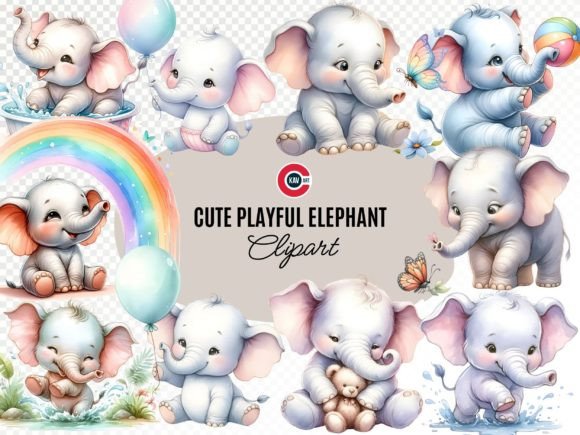
As a brand designer specializing in local business identity, my first impression of the Cute Elephant Fun Watercolor Clipart is that it immediately establishes a tone of gentle playfulness and organic warmth. When evaluating this graphic design asset for a real-world project, specifically for a hypothetical artisanal baby skincare line or a boutique children’s clothing store, the watercolor texture suggests a handmade, non-toxic, and safe product range. Unlike rigid vector art, the soft edges and fluid pigment bleeds inherent in these illustrations communicate approachability and care. For small business branding, this specific aesthetic bridges the gap between professional polish and the authentic, personal touch that customers expect from local makers. It feels premium yet accessible, avoiding the sterile look of mass-produced corporate design while maintaining enough refinement to justify a higher price point on shelf.
Elevating Product Packaging and Label Hierarchy
In a recent packaging design evaluation for a natural soap brand targeting young families, I tested how this clipart functions as a primary visual anchor. The strength of this asset lies in its ability to soften the visual hierarchy of a product label without overwhelming essential regulatory text. When placed on a kraft paper background or a matte white pouch, the elephant illustration acts as an emotional hook, drawing the eye before the customer reads the ingredients. For food businesses or handmade sellers, this is critical; the artwork must support the brand identity rather than compete with it. I found that using the elephant as a corner accent or a central hero image creates immediate product recognition. However, designers must be mindful of negative space. Because watercolor textures can be visually busy, I recommend pairing this clipart with clean sans-serif typography to maintain legibility on smaller containers like lip balms or sample sizes.
Strategic Applications Across Brand Touchpoints
Beyond the physical product, this asset proves versatile across various marketing visuals and promotional materials. For social media managers and creative entrepreneurs, consistency is key to building trust. I utilized the Cute Elephant Fun Watercolor Clipart to create a cohesive set of Instagram story templates and Facebook ad graphics. The playful nature of the illustration translates exceptionally well to digital formats, where it can be used to highlight seasonal sales, new arrivals, or educational content about product safety. In editorial design and web design, these elements serve as excellent dividers or background textures that add depth without reducing site performance. For brick-and-mortar boutiques, printing these illustrations on thank-you cards, stickers, and shopping bags extends the unboxing experience, reinforcing the brand narrative long after the purchase is made. This level of detail transforms a simple transaction into a memorable brand interaction.
Navigating Commercial Use and Technical Limitations
While the aesthetic appeal is high, practical application requires careful consideration of where this asset should not be used. During my review, I noted that the intricate watercolor details can get lost when scaled down below one inch, making it unsuitable for tiny legal disclaimers or dense ingredient lists. Furthermore, this style may clash with ultra-minimalist luxury branding or formal corporate identities that require sharp, geometric precision. Designers working on crowded packaging layouts should test the clipart extensively; if the background color is too dark or the surrounding text is too heavy, the delicate watercolor effect becomes muddy. It is also vital to verify the commercial license before incorporating this digital product into client work. Whether you are sourcing from a creative marketplace or a direct artist, ensuring you have the rights for physical product sales and unlimited print runs protects your small business from future legal complications.
Designer Notes on Print Quality and Typography Pairing
To maximize the impact of this graphic design asset, I always run a series of pre-production tests. First, check the PNG transparency and resolution; for professional branding and packaging design, 300 DPI is non-negotiable to avoid pixelation on printed labels. I also recommend testing the illustration in black and white to ensure it retains its form and charm even when color printing isn't an option, such as on thermal receipts or embossed hang tags. Typography pairing is equally important; during my assessment, I found that rounded serif fonts and organic handwritten scripts complemented the elephant’s curves better than stark, industrial typefaces. Finally, always create a physical product mockup before finalizing files. Screen colors often differ from CMYK print output, especially with watercolor gradients. By validating the asset against real-world constraints, local business owners can ensure their investment in design assets yields a polished, trustworthy, and commercially viable brand presence.
- Best For: Children’s products, organic skincare, bakery branding, nursery decor, and handmade gifts.
- Avoid Using On: High-density technical labels, luxury minimalist logos, or low-contrast dark backgrounds.
- Key Check: Always verify commercial licensing terms for physical merchandise and resale.
- Print Tip: Request a physical proof to validate watercolor color accuracy on your specific packaging material.
- Digital Use: Optimize file size for web banners to maintain fast load times while preserving visual quality.
Ultimately, the Cute Elephant Fun Watercolor Clipart serves as more than just decoration; it is a strategic tool for storytelling. For local businesses competing against larger corporations, the ability to convey emotion and craftsmanship through thoughtful illustration is a significant advantage. When applied with intention across packaging, social media graphics, and printable design collateral, this asset helps build a distinctive, recognizable, and deeply trusted brand identity. By treating this clipart as a core component of your visual strategy rather than an afterthought, you ensure that every customer touchpoint reinforces the unique value and heart of your business. Whether you are designing a Canva template for quick social posts or overseeing a full-scale packaging redesign, understanding the nuances of this illustration style will lead to more effective and resonant design outcomes.