Freesias Watercolor Clipart: An Embroidery Review
As a professional embroidery designer and product reviewer, I approach every new digital asset with a specific question: will this actually stitch out beautifully on fabric? When evaluating the Freesias Watercolor Clipart Image Set, my focus shifts immediately from screen aesthetics to needle performance. While these files are categorized as Illustrations, their potential extends far beyond digital scrapbooking or printable wall art. For makers, Etsy sellers, and apparel decorators, the true test lies in translating those soft watercolor washes into tangible thread. After reviewing this set through the lens of real-world production, I see significant promise for specific applications, provided you understand how to bridge the gap between pixel and stitch.
First Impressions: Mood and Visual Personality
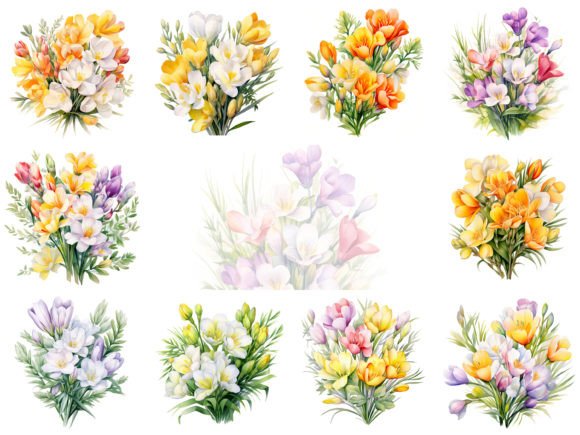
The initial impact of the Freesias Watercolor Clipart Image Set is undeniably romantic and organic. The artwork captures the delicate, trumpet-shaped blooms with a softness that feels vintage yet fresh. Unlike rigid vector art, the watercolor edges offer a natural variation that mimics the way light hits petals. For an embroidery project, this is both a blessing and a challenge. The mood suggests springtime collections, bridal accessories, and nursery decor. It does not scream "bold streetwear" or "industrial branding." Instead, it whispers elegance.
When I look at these illustrations, I immediately envision them as part of a handmade product line rather than mass-produced merchandise. The visual personality aligns perfectly with customers seeking personalized gifts or boutique items with a human touch. However, because watercolor relies on transparency and blending, you must assess whether your digitizing software or pre-digitized embroidery file can replicate that gradient without becoming muddy. The shapes are distinct enough to work well as an applique design foundation, but the internal details require careful planning to maintain clarity.
Real-World Application: The Linen Tea Towel Test
To truly judge this set, I mentally placed it in a recent client scenario: creating a premium linen tea towel collection for a small shop product launch. Tea towels are a staple for craft business owners because they offer a flat, stable surface ideal for showcasing detailed floral work. In this context, the Freesias Watercolor Clipart Image Set shines as a centerpiece motif.
For this specific embroidery project, I would treat the clipart as a guide for placement rather than a direct trace. Linen has a visible weave, which complements the painterly style of freesias. I envisioned using a light running stitch to outline the petals, preserving the airy feel of the original illustration, while using fill stitches only where color saturation is necessary. This approach prevents the design from becoming too heavy or stiff, which is a common pitfall when adapting watercolor art for machine embroidery design. The result would be a textured, breathable finish that respects both the fabric and the source art. Customers browsing Etsy listings often respond to this level of thoughtful adaptation because it signals quality over generic clip-art stitching.
Navigating Fabric Choices and Hoop Limitations
While the aesthetic is versatile, the practical application requires discernment. Not every garment in your inventory is suitable for this specific floral theme. Here is where you need to exercise caution:
- Stretchy Fabrics: Avoid using dense interpretations of this set on lightweight knits or performance wear. The contrast between fluid watercolor art and rigid satin stitch can cause puckering. If you must use it on a sweatshirt embroidery blank, ensure you are using adequate stabilizer and perhaps a cutaway backing to support the stitch density.
- Dark Backgrounds: Watercolor art typically assumes a white or light background to show luminosity. Stitching these freesias on black or navy fabric requires a complete rethinking of the color palette. You may need to add an underlay or shift to pastel thread colors to maintain recognition. Always test on dark fabric scraps before committing to a finished product.
- Small Hoop Sizes: The intricate nature of floral illustrations means they lose legibility when shrunk too small. If you are working with a 4x4 hoop size, simplify the composition. Isolate a single bloom rather than forcing a full bouquet. Tiny lettering or minute petal details will get lost in the noise of the fabric texture.
- Curved Surfaces: Caps and curved tote bag designs present alignment challenges. The organic flow of freesias looks best on flat planes. If adapting for headwear, choose a simplified side profile of the flower rather than a complex cluster to avoid distortion around the curve.
Impact on Brand Value and Customer Trust
Using high-quality design assets like the Freesias Watercolor Clipart Image Set elevates the perceived value of your work. In the saturated market of custom apparel and holiday embroidery, buyers are increasingly savvy. They can distinguish between a rushed, auto-digitized mess and a thoughtfully executed piece of fiber art. When the stitch direction follows the natural growth of the flower, and the thread colors blend harmoniously, it builds customer trust.
Furthermore, consistency matters. If you are building a brand identity around botanical themes, using a cohesive illustration set ensures your digital embroidery file library matches your printed packaging and social media mockups. This cross-platform consistency makes your shop look professional. Whether you are selling physical embroidered patches or offering printable mockups for other designers, maintaining the integrity of the original watercolor style reinforces your reputation as a serious creative entrepreneur.
Essential Designer Notes for Success
Before you load this design into your machine or list it in your shop, run through this practical checklist. These steps separate hobbyists from professionals:
- Verify Licensing: Confirm specifically whether the license covers commercial embroidery. Some illustration licenses allow for digital use but restrict selling finished stitched products or distributing the digital embroidery file itself. Protect your business by reading the fine print.
- Test Stitch Density: Watercolor implies lightness. If your digitized version is too dense, it will feel like armor. Print a black and white mockup or do a sew-out on scrap fabric to check coverage. Adjust pull compensation if gaps appear between the fabric and thread.
- Thread Color Matching: Do not rely solely on screen colors. Pull actual thread spools and lay them against the printed clipart. Watercolor gradients often require variegated threads or multiple shade changes to replicate effectively. Standard solid colors might look flat compared to the source art.
- Stabilizer Selection: Match your stabilizer to the end use. A baby embroidery item needs soft, wash-away stabilizers to prevent scratching delicate skin. A structured tote bag design might benefit from tear-away or fusible mesh. Never assume one stabilizer fits all projects.
- Mockup Accuracy: When creating listings, use realistic textures in your printable mockup. Showing the freesias on a smooth digital background misrepresents the final tactile experience. Buyers need to visualize how the thread interacts with the cloth.
Final Thoughts for Makers
The Freesias Watercolor Clipart Image Set offers a beautiful foundation for embroidery designers willing to put in the translation work. It is not a plug-and-play solution for every scenario, but for those targeting the personalized gift, nursery decor, or boutique apparel markets, it provides a sophisticated alternative to standard stock florals. By respecting the limitations of fabric and the strengths of the medium, you can turn these digital illustrations into heirloom-quality stitched goods. Remember, the goal is not to copy the image perfectly, but to capture its spirit in thread. Always sample first, respect the licensing, and let the unique texture of embroidery enhance the watercolor aesthetic rather than compete with it.