Watercolor Fairytale Owl Clipart: An Embroidery Review
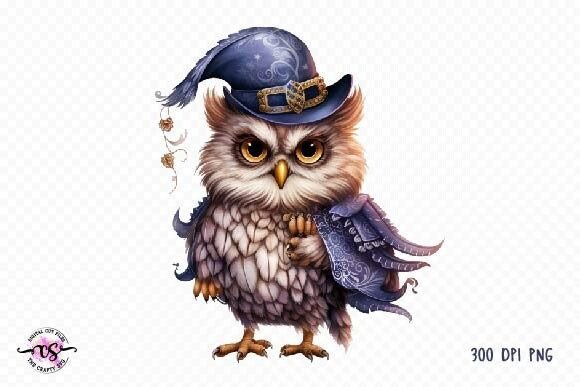
As a professional embroidery designer and product reviewer, I approach every new digital asset with a critical eye. When evaluating Watercolor Fairytale Owl Clipart, my first thought isn't just about how pretty the illustration looks on a screen; it is about how those soft, blended pixels will translate into tangible thread on fabric. This design falls squarely into the Illustrations category, but for makers and small business owners, its true value lies in its adaptability as a base for textile art. The mood is undeniably whimsical yet sophisticated, striking a balance that appeals to both nursery decor buyers and adult fashion enthusiasts. Visually, the owl possesses a gentle personality with organic lines that suggest movement rather than rigid geometry, which is a promising sign for digitizing potential.
Translating Soft Art into Stitched Reality
The primary challenge and opportunity with watercolor-style clipart is capturing the ethereal quality of paint using solid threads. In my assessment, this specific owl design offers excellent landmarks for digitization. The varying opacity in the original artwork provides a natural map for adjusting stitch density. Where the watercolor appears lighter or more transparent, you can utilize running stitches or lighter fill patterns to mimic that airy feel. Conversely, the deeper hues in the feathers and eyes provide clear boundaries for satin stitch outlines or denser fill areas to create definition.
For an embroidery project targeting the boutique market, this design avoids the trap of looking too cartoonish. It has enough artistic integrity to stand alone as a premium graphic. However, because watercolor edges are inherently soft and undefined, I recommend treating this as a guide rather than a strict coloring book. When creating your machine embroidery design, consider adding a subtle underlay or a textured fill stitch to replicate the paper grain often found in watercolor paintings. This adds tactile depth that flat fills simply cannot achieve, elevating the perceived value of the final handmade product.
Real-World Application: The Custom Sweatshirt Test
To truly judge the viability of Watercolor Fairytale Owl Clipart, I mentally placed it in a real-life production scenario: a custom embroidered sweatshirt for an Etsy shop launch. Sweatshirts are a staple for small shop product lines, but the fleece backing and stretchy knit present specific hurdles. In this context, the owl’s shape works beautifully because it is centrally balanced. Unlike asymmetrical designs that can pull fabric out of alignment, this composition sits well on the chest or back without requiring excessive stabilization.
However, the "fairytale" aspect implies intricate details like tiny stars, leaves, or fine feather textures. On a sweatshirt, these micro-details risk getting lost in the fabric pile. My practical advice is to simplify the outer edges of the clipart when digitizing for apparel. Retain the core character and expression of the owl, but merge smaller decorative elements into larger color blocks. This ensures the sweatshirt embroidery remains crisp and readable from a distance. For a personalized gift version, the open space around the owl allows for easy integration of names or dates using complementary script fonts, making it a versatile asset for custom apparel orders.
Navigating Fabric Limitations and Hoop Constraints
While this design shines on stable knits, it requires careful handling on other substrates. If you plan to use this for baby embroidery on onesies or lightweight cotton, the stitch count becomes a critical factor. Watercolor effects often tempt digitizers to use high-density fills to blend colors, but this can result in a stiff, bulletproof patch that is uncomfortable for infant wear. Always prioritize comfort over pixel-perfect replication. Use lighter thread colors and breathable fill patterns to maintain the garment's drape.
I must also issue a caution regarding dark fabrics. Watercolor art relies on white space and light transparency. Stitching this directly onto black or navy fabric without modification will cause the design to disappear or look muddy. You have two options: either add a white background shape (like a shield or circle) behind the owl, or invert the color palette entirely for a moonlight-themed variation. Additionally, be mindful of hoop size. If you attempt to shrink this design down for a cap or pocket, the delicate watercolor transitions will collapse. This clipart performs best at medium to large sizes where the stitch texture has room to breathe. For caps specifically, the vertical height of an owl can be problematic due to the curved surface; always test on a curved hoop before committing to bulk production.
Commercial Viability and Brand Consistency
For Etsy sellers and creative entrepreneurs, consistency is key to building brand recognition. Watercolor Fairytale Owl Clipart serves as an excellent anchor piece for a cohesive collection. Its aesthetic pairs naturally with floral botanicals, vintage keys, or celestial motifs. When listing finished items, ensure your printable mockup accurately represents the texture of embroidery rather than just pasting the digital clipart onto a shirt image. Customers appreciate transparency, and showing the actual stitched texture builds trust and reduces returns.
If you are selling digital embroidery file versions of this design, clarity in your product description is non-negotiable. Specify which formats are included and the exact dimensions. More importantly, verify your licensing. Just because you purchased the clipart does not automatically grant you the right to sell it as a standalone embroidery file or include it in design assets bundles. Always confirm whether your license covers commercial reproduction of derivative works. This protects your business and respects the original illustrator’s rights.
Essential Pre-Stitch Checklist for Makers
Before you load this design into your machine for a client order or shop stock, run through this practical checklist to avoid costly mistakes:
- Test on Scrap Fabric: Never stitch a watercolor-style design on a final product first. The color blending needs physical verification against your specific thread inventory.
- Check Stabilizer Pairing: For stretchy fabrics, use cut-away stabilizer to prevent distortion of the owl’s round shapes. For towels or textured fabrics, use a water-soluble topping to keep stitches from sinking.
- Evaluate Thread Contrast: Watercolor gradients rely on subtle shifts. Ensure you have enough thread variation to capture the transition, or intentionally stylize it with fewer colors for a cleaner stitch-out.
- Inspect Small Details: Zoom in on your digitizing software. Any element smaller than 1mm may need to be removed or enlarged to prevent needle breaks and thread bunching.
- Verify Licensing: Double-check if your purchase includes commercial rights for both physical products and digital files before listing anything for sale.
- Mockup Accuracy: Create listings that show the design on the actual finished product type you intend to sell, whether that is a tote bag design, pillow cover, or apron.
Final Thoughts on Design Integrity
Watercolor Fairytale Owl Clipart is more than just a cute graphic; it is a versatile foundation for high-quality embroidery when treated with technical respect. Its success depends entirely on the maker’s willingness to adapt the art for the medium. By understanding the interplay between paint-like visuals and thread mechanics, you can transform this digital illustration into a bestselling holiday embroidery item, a cherished nursery keepsake, or a signature piece for your craft business. Remember, the goal is not to copy the image perfectly, but to reinterpret it beautifully in thread. With proper testing and thoughtful digitizing, this owl has the potential to become a staple in your commercial embroidery repertoire, delighting customers who value both artistic charm and handmade quality.