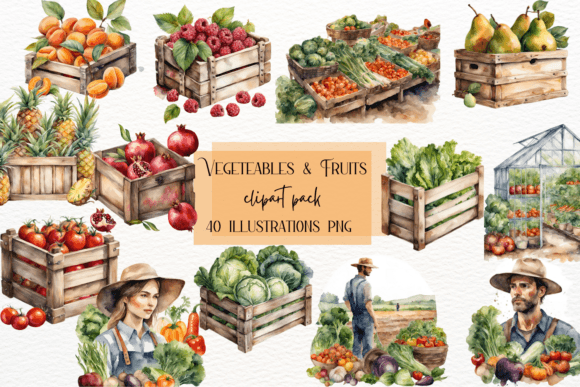
Watercolor Vegetables and Fruits Clipart for Embroidery
As a designer who has digitized and stitched out countless botanical motifs, I approach any new Watercolor Vegetables and Fruits Clipart collection with a healthy dose of skepticism. We have all downloaded beautiful digital illustrations only to find they translate poorly into thread. The transition from pixel to stitch is unforgiving. However, when evaluating this specific set of Illustrations for real-world application, my focus shifts from simple aesthetics to structural integrity and commercial viability. This review assesses whether these designs can actually withstand the rigors of a machine embroidery design workflow and result in a sellable finished product.
First Impressions: Organic Flow vs. Stitch Logic
My initial assessment of this Watercolor Vegetables and Fruits Clipart centers on shape definition. Watercolor styles are inherently soft, with bleeding edges and gradient washes that look stunning on screen but can become muddy in embroidery if not digitized with intention. These designs possess a distinct visual personality that feels fresh and garden-inspired rather than stiff or cartoonish. For an Etsy seller or craft business, this organic mood is currently in high demand.
However, the true test lies in the separation of elements. In reviewing the artwork, I am looking for clear boundaries where a satin stitch border could logically exist or where a fill stitch can mimic the watercolor wash without excessive density. The shapes here appear well-suited for interpretation as either traditional embroidery or an applique design. If you plan to use these for custom apparel, the layout offers enough negative space to prevent the "bulletproof vest" effect that occurs when designs are too dense for garment wear.
Real-World Application: The Market Tote Test
To truly evaluate utility, I mentally placed this Watercolor Vegetables and Fruits Clipart onto a natural canvas market tote bag. This is a staple small shop product and a perfect canvas for produce-themed art. Canvas provides a stable base, but its texture can swallow fine details. In this scenario, the bold silhouettes within the clipart collection would perform exceptionally well. The larger vegetable forms allow for longer stitch lengths, which reduces puckering and maintains the drape of the bag.
For a tote bag design, I would likely pair these illustrations with a simple running stitch outline to define the edges against the textured fabric. This combination elevates the perceived value of the item, transforming a generic blank into a boutique-quality accessory. Similarly, for kitchen towel or tea towel projects, the thematic relevance is immediate. Customers associate these motifs with culinary warmth, making them ideal for holiday embroidery gifts or housewarming presents. The key here is scale; resizing these design assets down too small for towels will lose the watercolor nuance, so maintaining a minimum width of 3-4 inches is advisable for clarity.
Navigating Fabric Challenges and Hoop Limitations
While the aesthetic is versatile, practical application requires caution depending on your substrate. When considering baby embroidery onesies or lightweight summer tees, the stitch density becomes critical. Watercolor effects often require complex color blending. If the digitization uses heavy layering to achieve this, it may be too rigid for stretchy knits. Always verify the density before committing to a personalized gift for infant wear. You may need to use a lighter stabilizer or opt for a tear-away backing to preserve fabric hand.
Dark fabrics present another hurdle. Watercolor Illustrations typically rely on white or light backgrounds to create luminosity. Stitching these directly onto navy or black sweatshirts without adaptation will result in lost contrast. For sweatshirt embroidery on dark garments, consider using a white felt underlay or converting the design into an embroidered patch first. This preserves the intended color vibrancy and protects the garment from needle damage caused by high-density fills.
Furthermore, be mindful of your hoop size. Detailed corners in fruit stems or leaf veins can suffer distortion if pushed to the absolute edge of a hoop’s stitching field. If you are working with smaller hoops, isolate individual vegetables or fruits from the bundle rather than trying to shrink a full composition. Resizing complex digital embroidery file sets below 80% often compromises stitch registration, leading to gaps between outlines and fills.
Commercial Viability and Brand Consistency
For creative entrepreneurs, consistency builds trust. Using this Watercolor Vegetables and Fruits Clipart across multiple product lines creates a cohesive brand identity. Imagine offering a matching set: an apron for the parent and a bib for the child, both featuring the same carrot or strawberry motif. This cross-merchandising strategy increases average order value. The style is sufficiently unique to stand out in search results but classic enough to avoid looking like a fleeting trend.
When creating printable mockups for listings, ensure the digital representation matches the physical output. Customers feel betrayed when a listing photo shows a crisp digital painting, but the received item looks blocky. Use actual stitch-out photos whenever possible. If you must use digital previews, apply a texture overlay that mimics thread sheen. This transparency improves buyer engagement and reduces return rates due to unmet expectations. Whether you are selling the physical handmade product or the embroidery file itself, accurate representation is non-negotiable.
Essential Designer Notes Before You Stitch
Before loading this Watercolor Vegetables and Fruits Clipart into your machine for a client project or inventory run, adhere to these professional protocols:
- Test on Scrap Fabric First: Never assume settings transfer perfectly between fabric types. A test stitch-out on similar weight material reveals tension issues and color blending accuracy.
- Check Thread Color Contrast: Watercolor relies on subtle shifts. Verify your thread colors against the design chart. You may need to blend two similar shades in the same area to replicate the painted effect effectively.
- Review Stabilizer Choice: Match support to weight. Woven fabrics may only need tear-away, while knits demand cut-away or fusible mesh to prevent distortion during the fill stitch sequences.
- Inspect Small Details: Zoom in on the embroidery file in your software. Ensure tiny seeds or stem details are large enough to stitch cleanly. Elements under 1mm often cause thread breaks or bird nesting.
- Confirm Licensing Terms: This is vital for commercial embroidery. Verify whether the license permits selling finished physical products versus selling the digital files themselves. Protect your business by understanding usage rights before listing items on Etsy or at craft fairs.
- Evaluate Washability: For items like kitchen linens or baby clothes, test wash durability. Watercolor fills can sometimes pull apart after laundering if the underlay was insufficient. Pre-washing tests save reputation.
Ultimately, this collection offers significant potential for makers willing to respect the technical demands of translating paint to thread. By treating Watercolor Vegetables and Fruits Clipart as a foundation for thoughtful digitization rather than a plug-and-play solution, you can create custom apparel and home goods that possess genuine artisanal quality. The success of your embroidery project depends less on the digital file alone and more on your willingness to adapt it to the tangible realities of needle, thread, and fabric.